A merchant past
The "Amur Chicago": a gold rush, stone mansions, a fire-watch tower and three centuries of Cossacks.
Blagoveshchensk sits just 750 metres of water from China's Heihe: a merchant-era "Amur Chicago", the cuisine of two countries, the Vostochny Cosmodrome, and a dinosaur graveyard right inside town. Let's build a trip around your interests, season and budget.
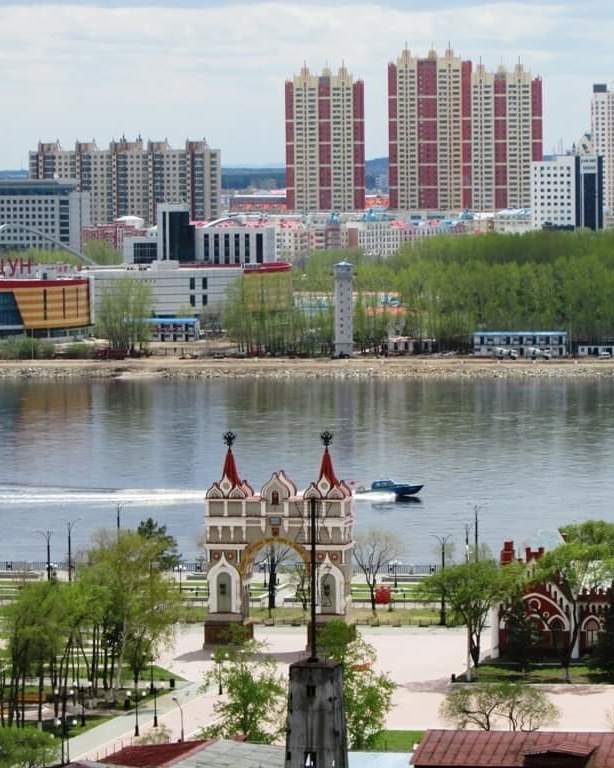
In a few days you can walk the embankment facing a Chinese metropolis, catch the merchant-era "Amur Chicago", touch dinosaur bones and see where the rockets launch.
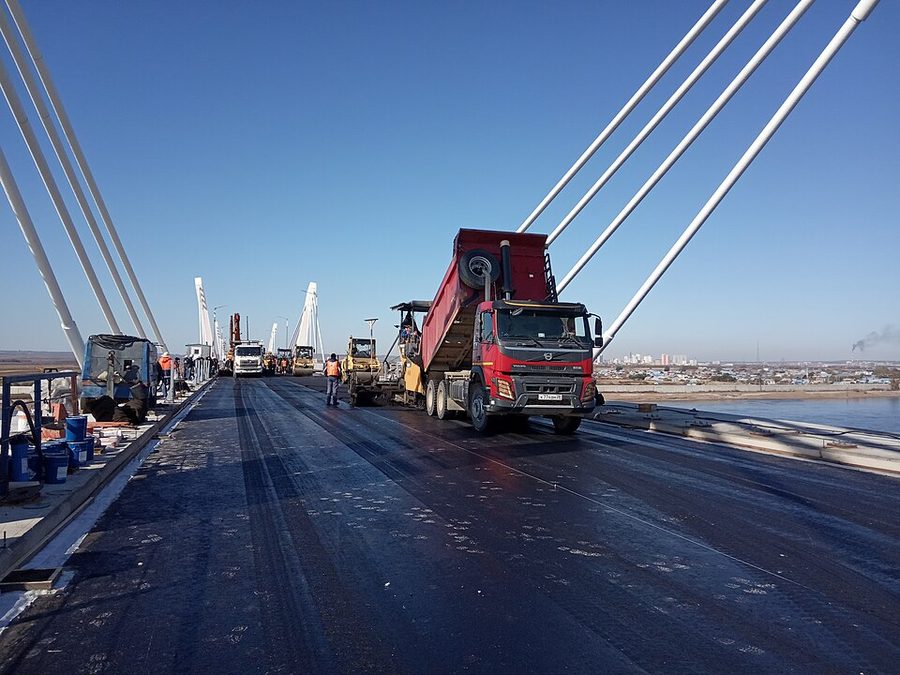
The embankment, the Triumphal Arch, the Muravyov-Amursky monument, the first Russia–China road bridge and the world's first cross-border cable car to Heihe.
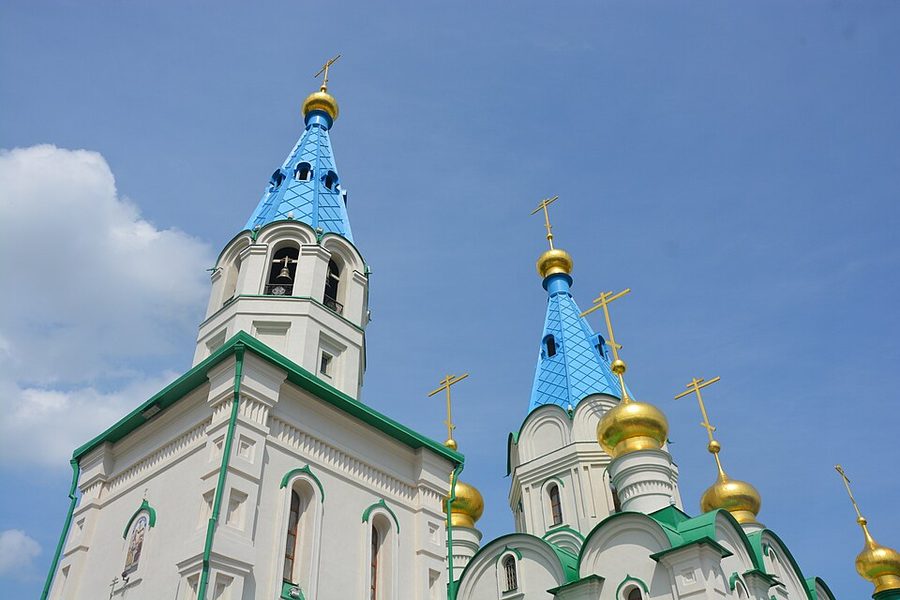
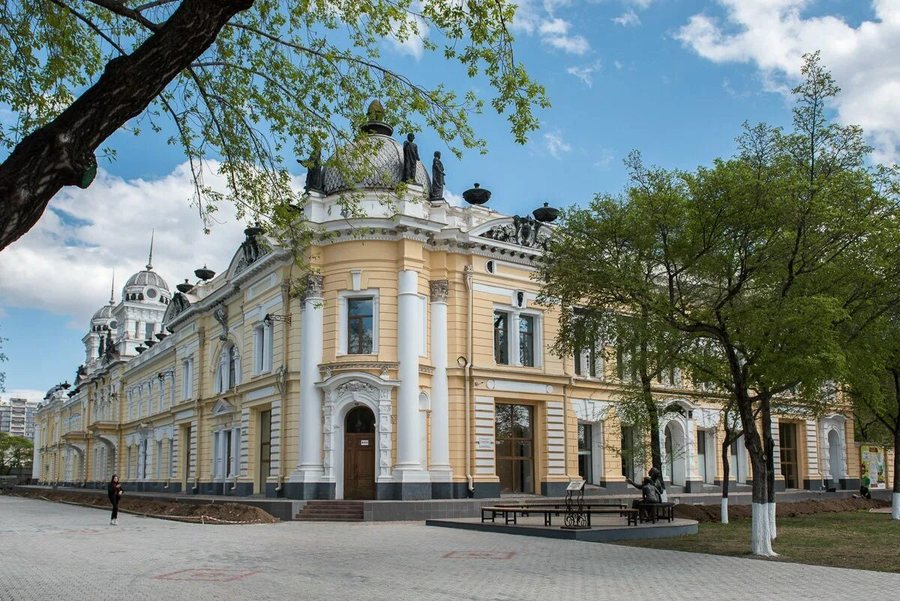
The "Amur Chicago": a gold rush, stone mansions, a fire-watch tower and three centuries of Cossacks.
Heihe's Dongbei cooking, Amur river fish and fish soup, soy and tofu from the "soy capital", wild taiga harvests and honey, Korean-style fern.
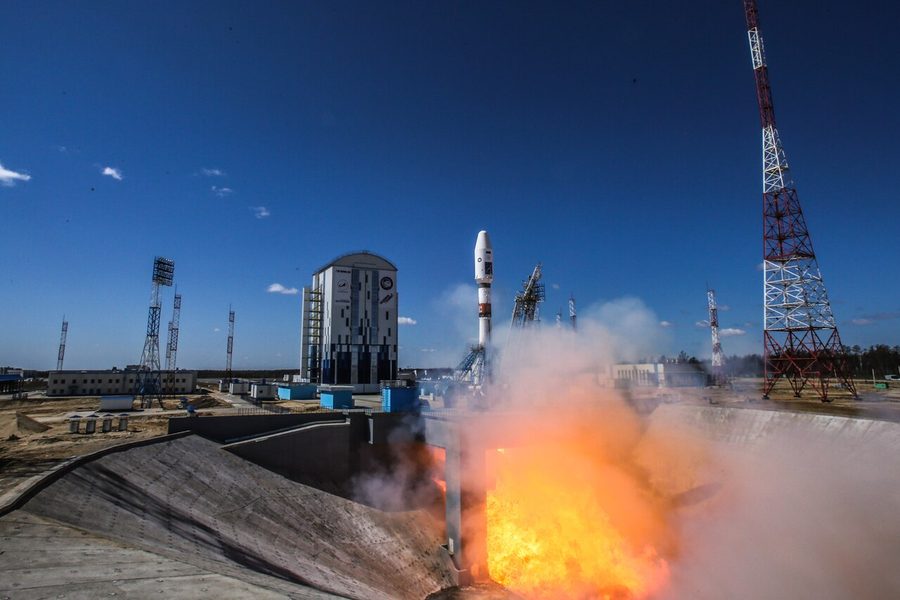
A city dinosaur graveyard and rocket launches 180 km away — the Amur region's past and future side by side.
Click a marker for a description and photo. Filter by category to plan your day.
Blagoveshchensk is 5,595 km east of Moscow and six time zones away. Here's how people get here, which season fits which mood, and the sums to plan around.
Heihe is right there from the embankment — 750 metres of water. No visa needed, just a passport: reaching the neighbouring country is easier and cheaper than the next region over. Let's price it out.
Since 15 September 2025 Russians enter China visa-free for up to 30 days; in May 2026 the arrangement was extended to 31 December 2027. All you need is a passport valid for at least 6 more months — no invitation, hotel booking or paperwork. It's the visa that's free: the crossing over the Amur itself is paid, and that's the main expense.
The classic option: 10–15 minutes on the water plus formalities. Departures from Blagoveshchensk at 10:00, 12:00, 14:00 and 16:00 Amur time. 3,780 ₽ over, 2,520 ₽ back. In the off-season, before the ice sets, hovercraft run — pricier.
Over the first Russia–China road bridge. First departure from the "Amurasso" coach station at 07:30, in Heihe by 09:50; last one out of Blagoveshchensk at 14:10. About 2,650 ₽ one way, ~2 h 20 min including the border. In winter a pontoon crossing runs too.
The world's first cross-border cable car over a state frontier. Cabins hold up to 110 people, 6–8 minutes above the Amur. The cable was strung across the river in July 2026; opening is set for the end of the year — fares not yet announced.
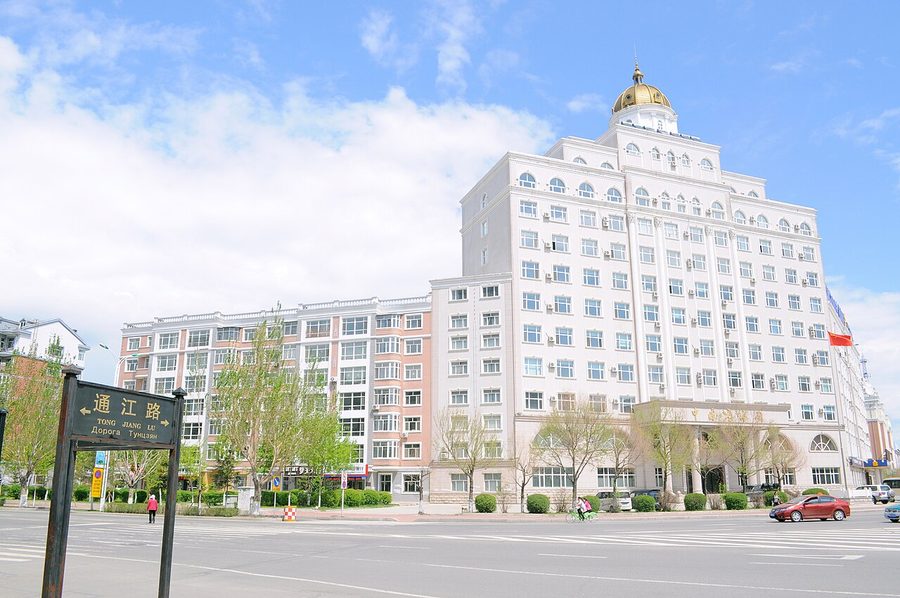
Heihe runs on Beijing time, Blagoveshchensk on Amur time. Crossing the river you gain an hour; coming back you lose it. Crossing timetables are in Amur time.
In markets and malls the price is a starting point, not a final one. Knocking off 10–30% is normal. Without haggling you simply overpay.
The border is quick on the way in, slower on the way out — they inspect your shopping. Leave a buffer and don't cut it close with the last departure.
Markets and electronics, Dongbei food, spas and massage, a promenade looking back at Russia, a wetlands park. And a category of its own — all-in-one dentistry and cosmetic procedures.
A cable car is being strung across the Amur from Russia to China — the only one of its kind anywhere. Instead of a ferry or a bus with formalities, a cabin and a few minutes above the border river. Construction began in 2019 and is now in its final stretch.
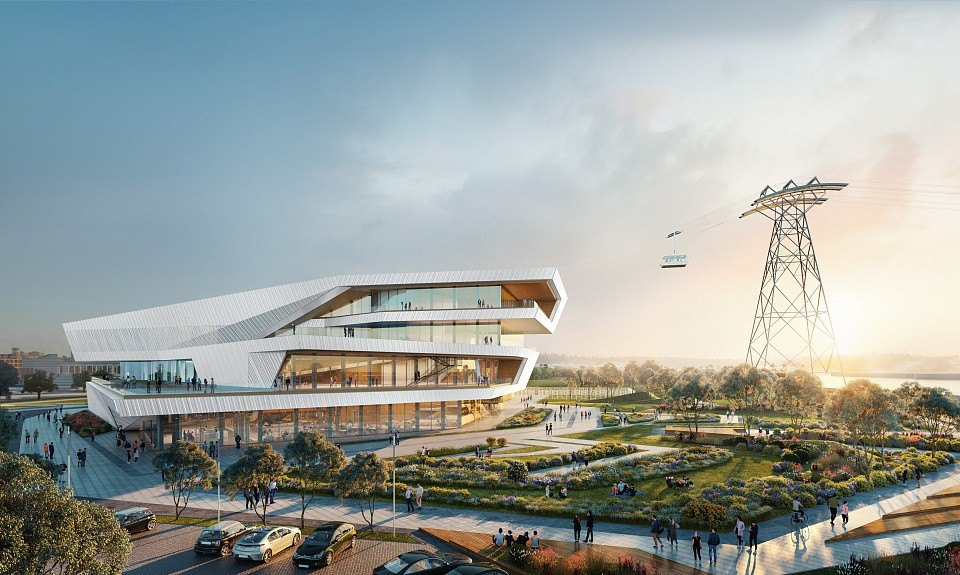
A four-storey building on the embankment: border and customs control, duty-free shops, a retail gallery and a restaurant overlooking the Amur. Planned hours are 07:00 to 23:00 daily. The project costs around 10 billion roubles.
The planner factors in your group, season, interests and budget — it spreads activities across days and prices everything transparently.
Fill in the form on the left — the planner will pick activities day by day, build a timeline and break down the budget.
The 17th-century Albazin fort, the city's birth under Muravyov-Amursky, the merchant-era "Amur Chicago", and the 20th–21st-century border city — from a closed frontier to a bridge and a cable car into China.
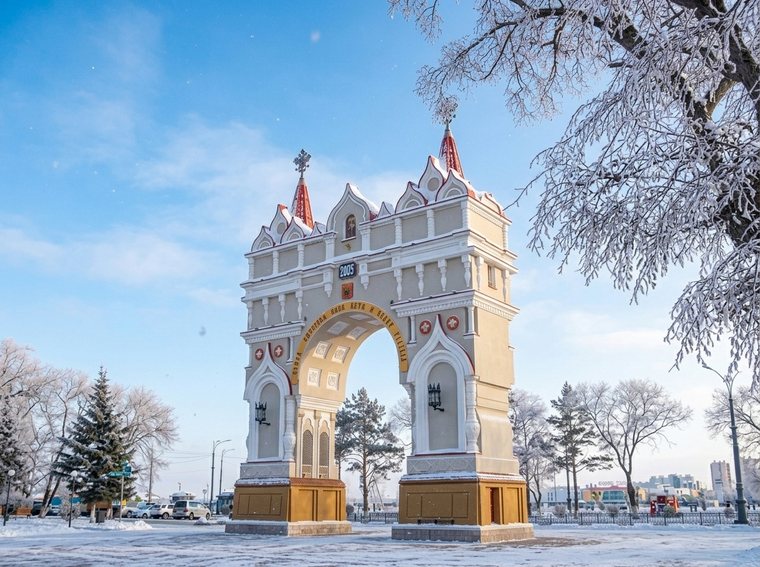
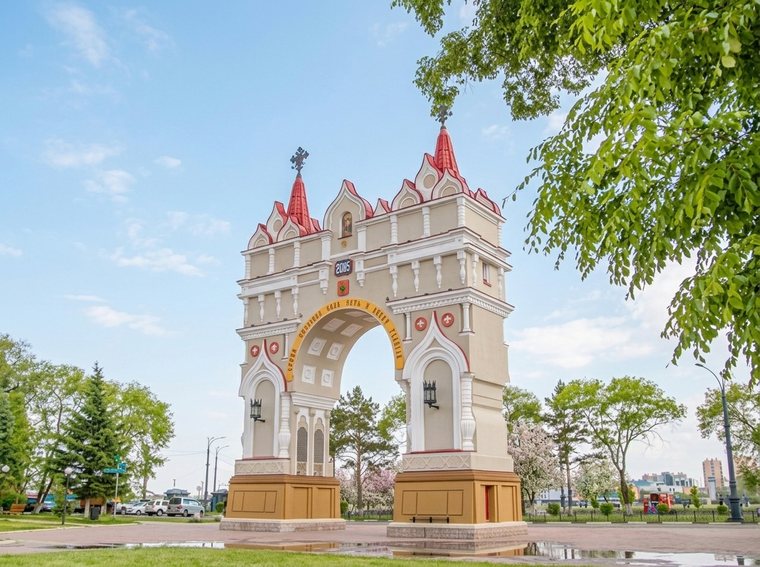
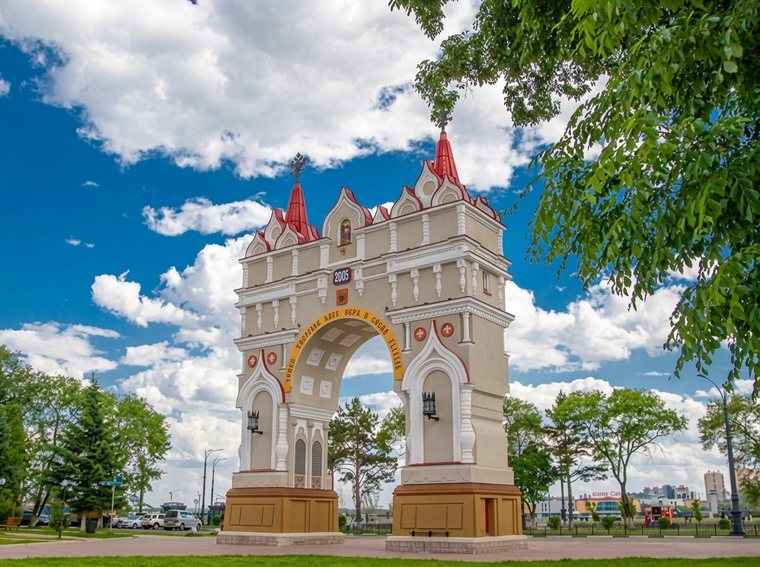
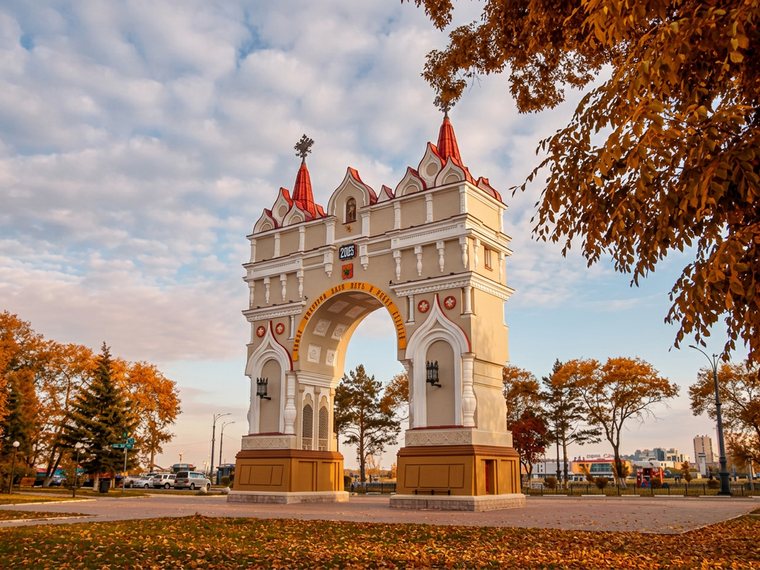
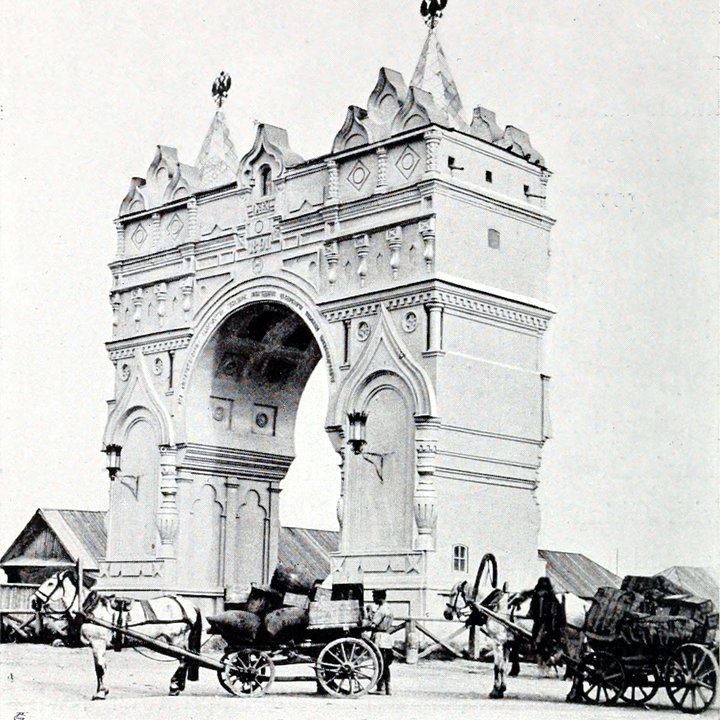
Drag the slider. On the left, the Triumphal Arch in a photo from 1904; on the right, the same arch today. The 1891 original did not survive the 20th century: the present arch was rebuilt in 2005 from old photographs.
The Dongbei cooking of neighbouring Heihe has long been everyday fare here — alongside Amur river fish, soy from Russia's "soy capital", wild taiga harvests and a Cossack heritage.
Facts, oddities and city lore that turn a trip into a story — from those who've already been to this border between two worlds.
Quick answers to the things people check first. Details are in the sections above.
Five stops along the Amur — from the Triumphal Arch to the singing fountain. Scroll, and the map follows you.
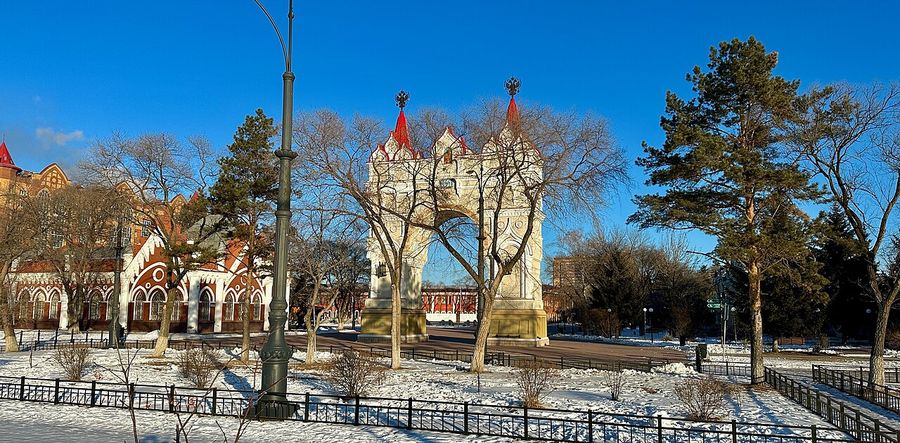
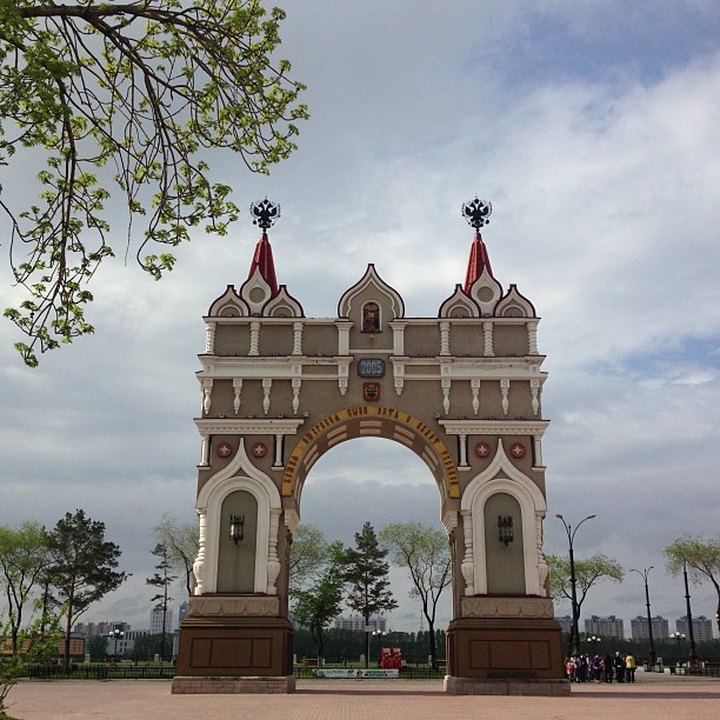
The grand approach to the Amur starts here. The twenty-metre arch with double-headed eagles was raised in 1891 for Tsarevich Nicholas's visit and recreated in 2005. Beyond it open the river and the Chinese bank.
History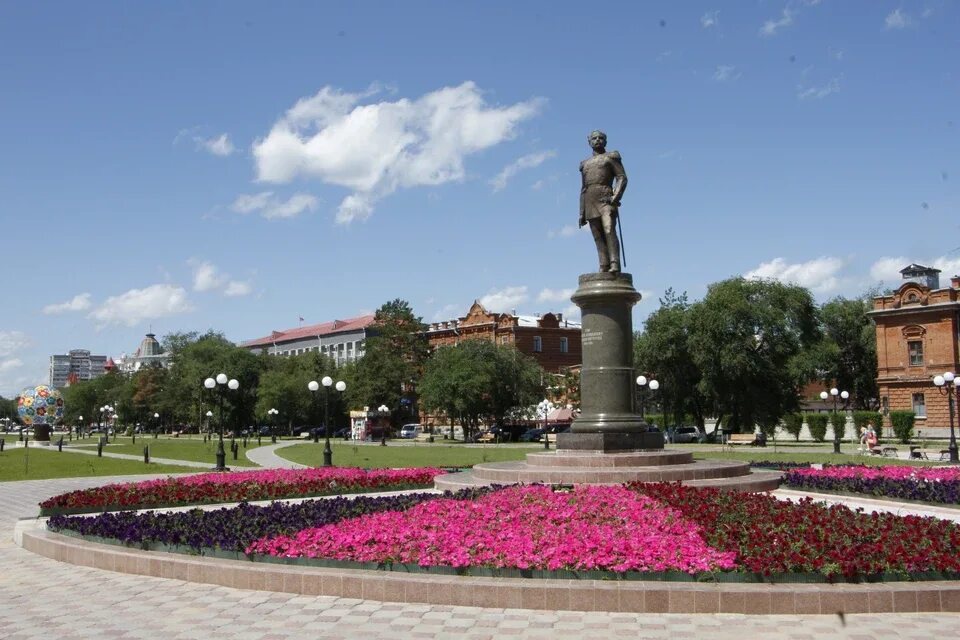
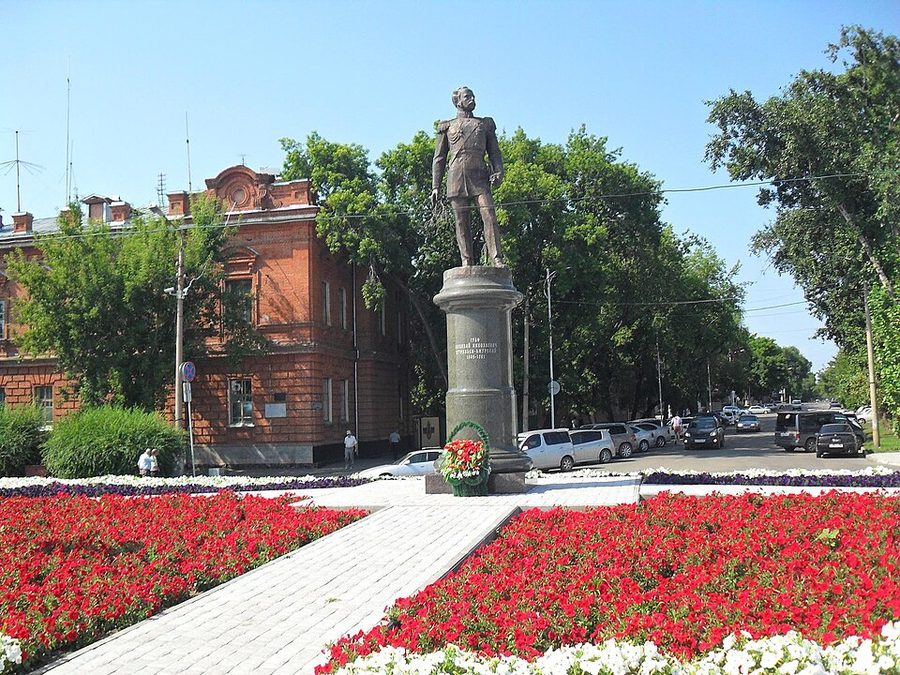
The city's founder and "gatherer" of the Amur region stands on the embankment, looking out at the Amur with China beyond. It was he who signed the 1858 Treaty of Aigun that returned these lands to Russia.
History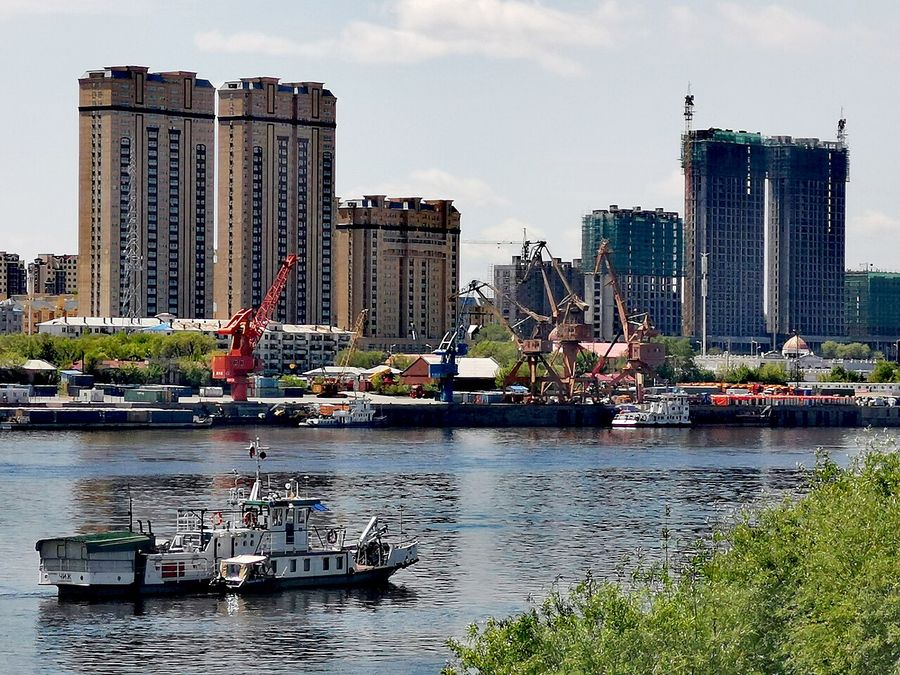
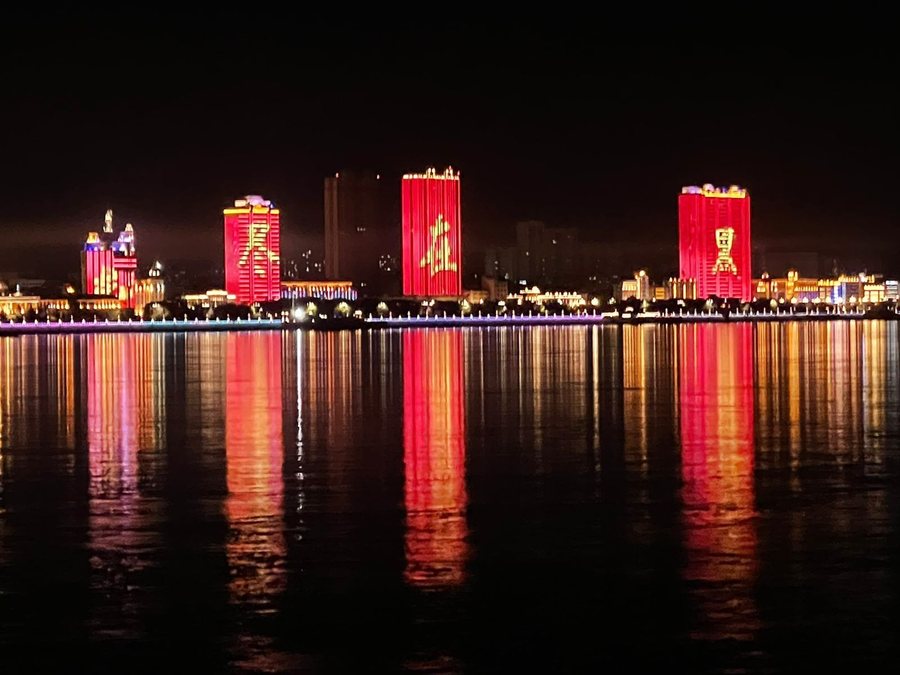
Here the Amur narrows to 750 metres, and from the parapet you can see Chinese Heihe: towers, a promenade, evening lights. The world's only pair of cities of two countries standing this close — eye to eye across the river.
River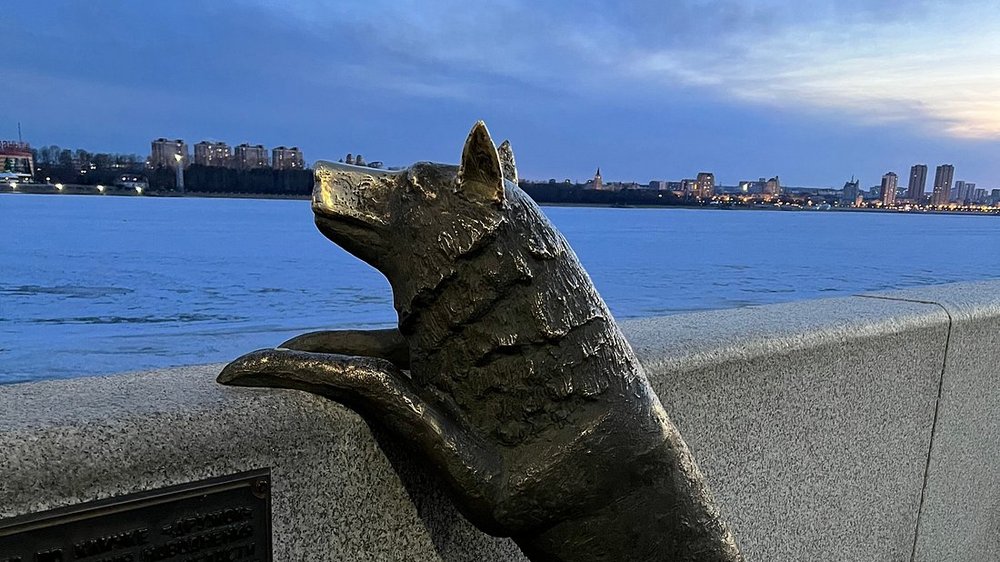
A bronze dog on the parapet — a memory of the 2013 flood, when the Amur rose above 8 metres. He waited days for his owners on the porch of a flooded house; now, locals say, he "guards the whole city".
History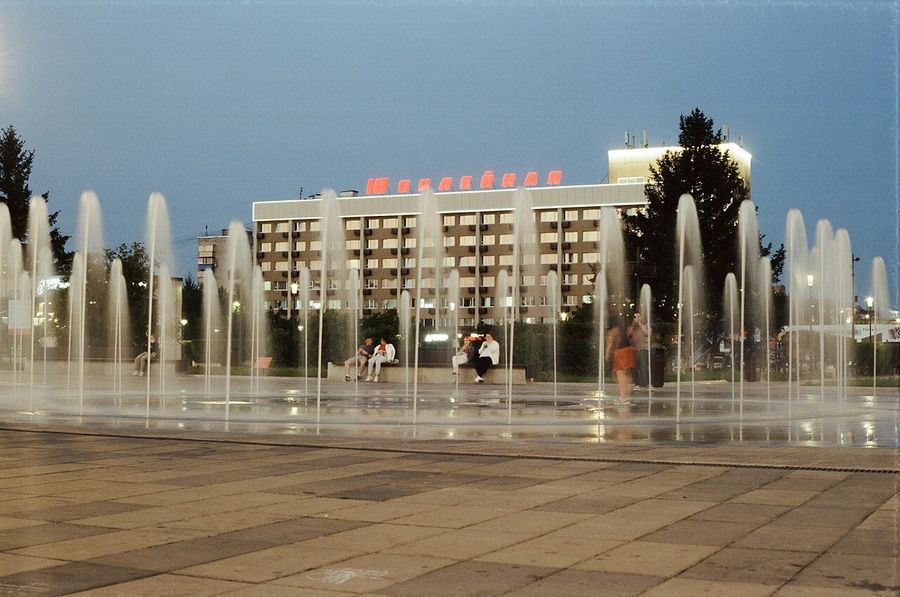
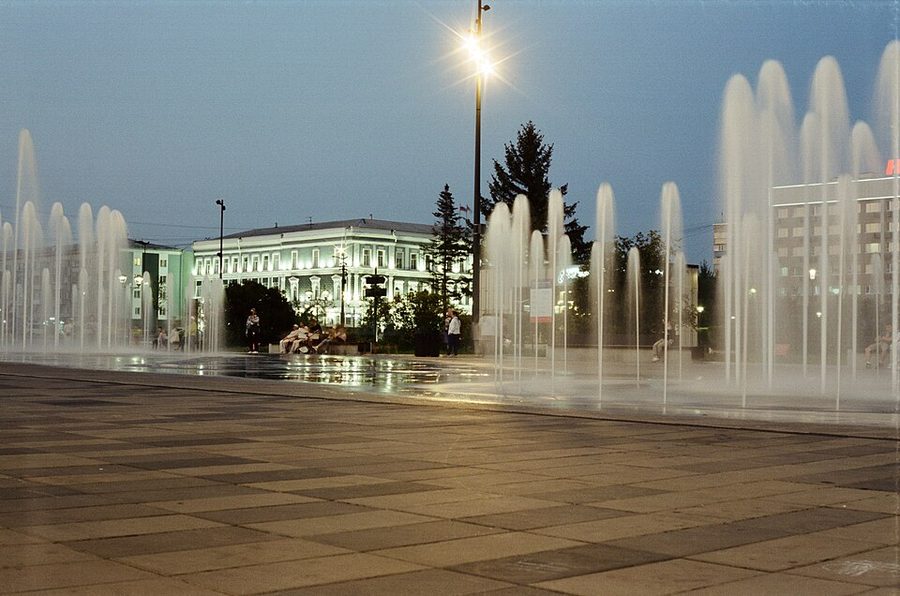
The walk leads to the city's heart: Eurasia's largest walk-through light-and-music fountain rises straight from the pavement — nearly 3,000 m² of jets. By day children dash through it; by night, a water-and-light show set to music.
CityThe embankment facing China, the Triumphal Arch, the bridge across the Amur, space and dinosaurs.
A guesthouse, a tour, a cafe, an event — write to me. Adding a point to the map or a line to the events feed is free, as long as it is genuinely worth a visitor’s time. Paid placement is a separate conversation.